There are Many Questions in this Single Post ..
I would like the answer to be more Theoretical and less Mathematical, because what my Professor did was to simply do the math and then name the terms “Oh This is called Damping Coefficient” and “Oh This is called Resonating Frequency” etc
-
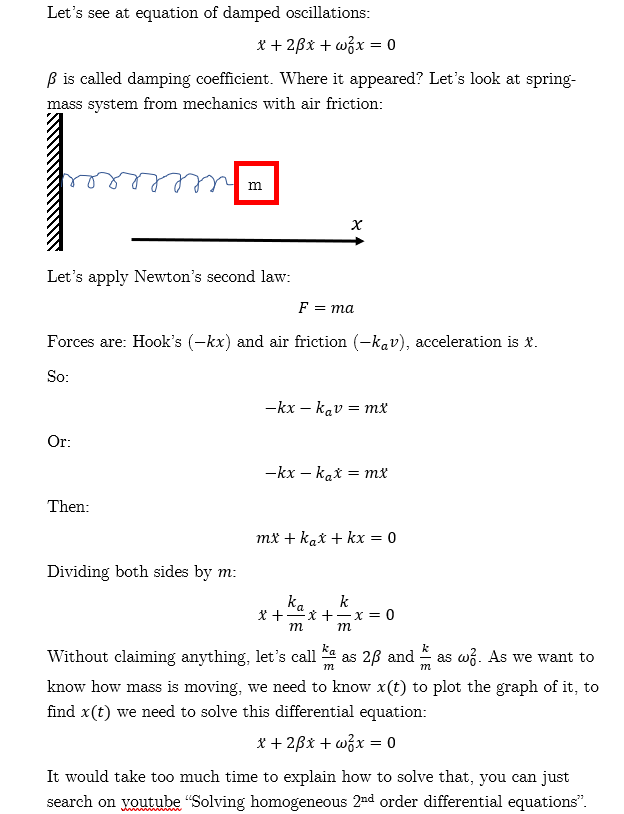
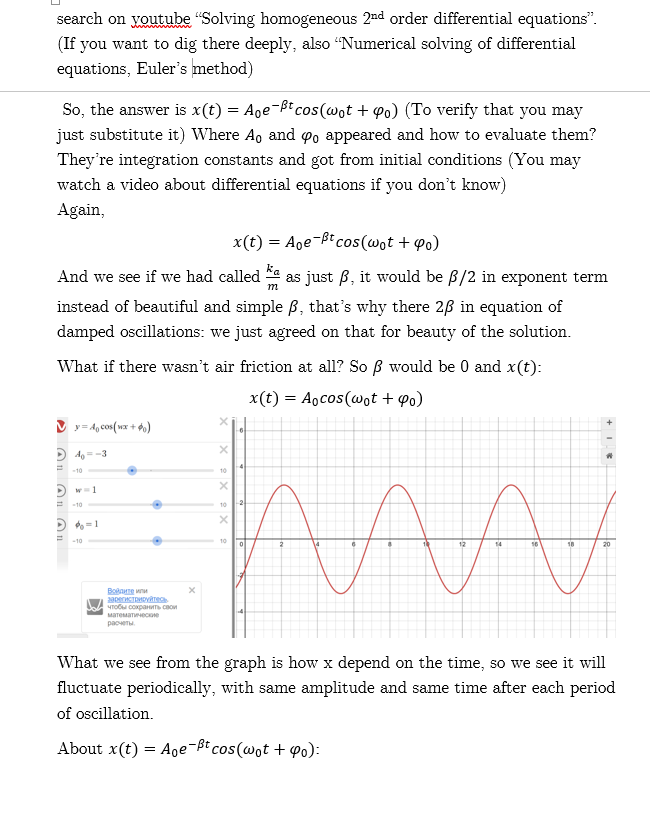
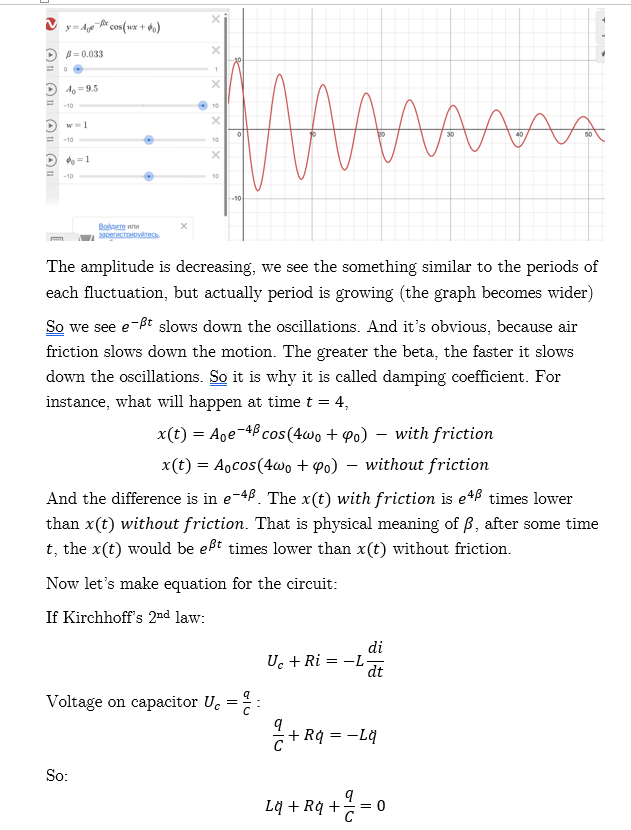
What is Damping Coefficient ? (for any general system)
-
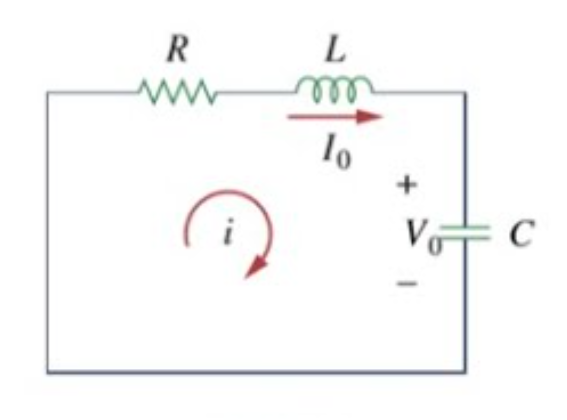
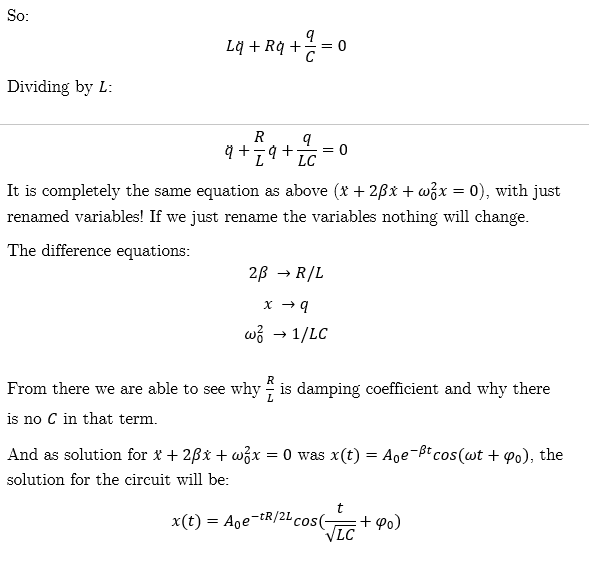
Now Lets take a source free Series RLC Circuit, the damping coefficient is calculated out to be (R/2L), my question is “Why is the C missing here ?”
“R” is the component which dissipates energy, fine, “L” sustains energy, fine again, but C ? does it not play any role ? in the oscillation L and C periodically have energy exchange between each other, both act as sources at some point of the process, both take time in reaching their specific States, peak states and totally exhausted states, then Why is “L” in the equation but “C” is left behind ?
Using a mechanical Analogy of a spring mass system could help, but only to some extent, because here there is, according to me, no single Component L or C acting as “Fixed component of Inertia”, they are both acting as sources at some point, Also Both capacitor and inductor act as storage elements too, just their ways of Storing Energy are different.
The Damping Ratio Involves “C” however,
That makes me feel “Maybe I still don’t get what Damping Coefficient is” and that why Question (1) was asked .
-
The fun part is that, in a Parallel RLC Circuit the Damping coefficient is (1/2RC) , this time the L is missing. Lets leave the Parallel RLC For now though .