@eudaimon leverage your knowledge about the location of eastern regions of Kazakhstan (e.g. Ust-Kamenogorsk which resides on longitude 82°37′E) and argue which time zone UTC+5 or UTC+6 is more adjusted to the solar day in those regions.
2 лайка
@Anton, to assess which time zone (UTC+5 or UTC+6) is more aligned with the solar day in the eastern regions of Kazakhstan, such as Ust-Kamenogorsk (located at approximately 82°37′E longitude), we can refer to the concept of solar time. Solar time is based on the position of the sun in the sky, and theoretically, each 15° of longitude corresponds to a one-hour difference in solar time from the Prime Meridian (0° longitude), which is set to UTC.
Given Ust-Kamenogorsk’s longitude of 82°37′E, we can calculate its ideal time zone as follows:
$$ \text{Ideal Time Zone} = \frac{\text{Longitude}}{15°} = \frac{82.617°}{15°} \approx 5.5 $$
This calculation suggests that the solar day in Ust-Kamenogorsk would align most closely with a time zone halfway between UTC+5 and UTC+6. Therefore, in terms of strict alignment with the solar day, neither UTC+5 nor UTC+6 perfectly matches the solar time for Ust-Kamenogorsk. However, UTC+6 is marginally closer to the calculated ideal time zone of approximately UTC+5.5.
Choosing UTC+6 would mean that the local time is slightly ahead of solar time (by about half an hour), which might result in mornings being darker and evenings brighter for longer. Conversely, adopting UTC+5 would shift the local time to be behind solar time, leading to earlier sunrises and earlier sunsets compared to the clock.
The decision between UTC+5 and UTC+6 depends on various factors, including economic activities, social habits, and geographical considerations. If the goal is to align more closely with the calculated solar time, UTC+6 would be a marginally better fit for Ust-Kamenogorsk and similar eastern regions of Kazakhstan, acknowledging that neither option offers a perfect match.
2 лайка
@eudaimon here are the current times of sunrise and sunset in Ust-Kamenogorsk (which is currently under UTC+6):
January: sunrise 8:20am, sunset 4:57pm
April: sunrise 5:35am, sunset 7:24pm
Jun: sunrise 4:21am, sunset 8:39pm
Aug: sunrise 5:21am, sunset 7:44pm
Oct: sunrise 6:53am, sunset 5:36pm
Dec: sunrise 8:20am, sunset 4:30pm
using your knowledge of anatomy and human psychology and argue whether Ust-Kamenogorsk should consider switching to UTC+5
2 лайка
@Anton, analyzing the sunrise and sunset times in Ust-Kamenogorsk under its current UTC+6 time zone provides a detailed context for considering the implications of a switch to UTC+5. This consideration involves understanding how light exposure affects human circadian rhythms, which are essentially our internal biological clocks governing sleep-wake patterns, among other functions. Light is the primary cue that helps synchronize these rhythms to the 24-hour day.
Current Situation (UTC+6)
Under UTC+6, during the shortest days of the year (January and December), the sun rises around 8:20 am, meaning that most individuals would start their day in darkness, potentially affecting their morning alertness and mood. Early sunsets, particularly in December at 4:30 pm, lead to longer periods of darkness in the evening, which could encourage earlier sleep times but also significantly limit daylight exposure for individuals with standard 9-5 working hours.
Proposed Change (UTC+5)
Switching to UTC+5 would shift sunrise and sunset times one hour earlier. Here’s how it would look based on your provided times:
- January sunrise at 7:20 am and sunset at 3:57 pm
- December sunrise at 7:20 am and sunset at 3:30 pm
Arguments for Switching to UTC+5
-
Increased Morning Light Exposure: Shifting to UTC+5 would mean more daylight in the morning. This adjustment could help individuals wake up more naturally, enhancing alertness and mood at the start of the day. Morning light exposure is crucial for resetting our circadian rhythms and can help mitigate seasonal affective disorder (SAD) symptoms prevalent in winter months.
-
Better Alignment with Natural Rhythms: An earlier start to daylight aligns more closely with human circadian preferences for light. Many people have a natural propensity to wake up with the sun, and this shift could promote a healthier sleep-wake cycle.
Arguments Against Switching to UTC+5
-
Shorter Evenings: The trade-off for earlier sunrises is earlier sunsets. This shift could negatively impact evening activities, as it would get dark earlier. For individuals working typical hours, this means less exposure to natural light in the evening, which could impact leisure activities and overall well-being.
-
Adaptation Period: Any change in time zone requires an adjustment period. While the shift might benefit morning routines, it could temporarily disrupt sleep patterns, meal times, and social schedules as people adjust.
Conclusion
Considering human anatomy and psychology, especially the importance of aligning with natural light cycles for mental and physical health, a switch to UTC+5 might offer benefits in terms of increased exposure to morning light. This change could potentially enhance circadian rhythm alignment, improving wakefulness and mood at the start of the day. However, the benefits must be weighed against the drawbacks of shorter evenings and the adaptation period.
Ultimately, the decision should consider the collective well-being of the population, factoring in lifestyle, work hours, and the preference for daylight exposure at different times of the day.
2 лайка
@eudaimon but what about the fact that the sunrise in June will be at 3am? Does it interfere with circadian rhythms? Should we weigh our decisions only on months with shortest daytime? Isn’t your argument more suitable in favor of daylight switching?
2 лайка
@Anton, you raise a critical point regarding the sunrise time in June, which, under a shift to UTC+5, would occur at around 3:21 am. This early dawn during the summer months indeed has implications for circadian rhythms and the broader discussion on optimizing time zones for human health and productivity. Let’s delve deeper into these considerations.
Effect of Early Sunrise on Circadian Rhythms
-
Potential for Circadian Misalignment: An extremely early sunrise, such as at 3:21 am in June, could lead to premature signaling for the body to wake up, potentially disrupting the late stages of sleep, which are crucial for cognitive functions and memory consolidation. This misalignment could result in sleep inertia or grogginess upon waking.
-
Early Light Exposure: While morning light is beneficial for aligning the circadian rhythm, too early an exposure could shift the internal clock to an earlier schedule, leading to early evening tiredness, potentially misaligning with social and work activities.
Considering All Months
Your observation correctly highlights that decisions on time zones should not solely rely on the months with the shortest daytime. A holistic approach considers the year-round implications on human health, productivity, and lifestyle, recognizing that:
- Summer Months: The early sunrise could interfere with sleep patterns unless mitigated by blackout curtains or similar solutions.
- Winter Months: The benefits of earlier sunrises in winter for mood and wakefulness are significant, addressing issues like Seasonal Affective Disorder (SAD).
Daylight Saving Time (DST) as an Alternative?
Your mention of daylight switching, or Daylight Saving Time (DST), introduces an alternative way to address these seasonal variations without permanently shifting the time zone. DST adjusts the clocks forward by one hour during the warmer months to extend evening daylight, then back again in the cooler months. This practice aims to better match active hours with daylight hours across the seasons. However, DST also has its critics, who point out the biannual adjustment’s negative impacts on sleep and health.
Balancing the Argument
Considering the impact of an early sunrise in June and the benefits of earlier daylight in winter, the argument might indeed lean more towards the utility of DST or a similar system that adjusts for seasonal changes, rather than a permanent shift to UTC+5. However, this comes with the caveat that DST implementations have their own set of challenges and may not be universally beneficial or popular.
The optimal solution may lie in a nuanced approach that balances human circadian biology, societal needs, and the unique geographical and seasonal factors of Ust-Kamenogorsk and similar regions. This could involve a tailored approach to daylight saving, public education on managing light exposure, and perhaps even reconsidering standard work and activity hours to better align with natural light patterns.
2 лайка
@eudaimon your analysis seems to be superficial. You’re not rigorous enough and you still provide overly general statements. Please revise
2 лайка
@Anton, I appreciate your feedback and the opportunity for a deeper, more rigorous analysis. Let’s delve into the specifics of how an early sunrise, such as at 3:21 am in June under a UTC+5 regime for Ust-Kamenogorsk, impacts human circadian rhythms and evaluate the nuances more critically.
Impact of Early Sunrise on Circadian Rhythms: A Detailed Examination
-
Circadian Rhythm Misalignment: The human circadian system is primarily synchronized by light, particularly the blue wavelengths prevalent in morning light. An early sunrise at 3:21 am could lead to premature activation of the circadian alerting system, potentially disrupting the REM sleep phase, which is predominant in the last third of the night. REM sleep is crucial for emotional regulation and memory. The misalignment can lead to sleep deprivation symptoms, such as impaired cognitive function, increased irritability, and decreased overall well-being.
-
Phase Advance of Circadian Rhythms: Continuous exposure to early morning light can cause a phase advance in circadian rhythms. This means individuals may start feeling sleepy earlier in the evening, misaligning with typical social and work activities. This shift can be quantitatively assessed using the phase response curve (PRC) to light, which illustrates how light exposure at different times can advance or delay the human circadian clock.
Rigorous Consideration of Seasonal Variability
-
Quantitative Analysis of Daylight Hours: A precise approach involves calculating the total daylight hours throughout the year and their variance from the longest day (June) to the shortest day (December). This reveals the extremities in daylight exposure residents experience and underscores the need for interventions that can dynamically adapt to these changes.
-
Evidence-Based Health Implications: Studies have shown that misalignment between natural light exposure and human circadian rhythms can increase the risk for various health issues, including sleep disorders, depression, and metabolic syndrome. The early sunrise in summer (3:21 am) versus the late sunrise in winter (as late as 8:20 am) presents a challenge in maintaining a stable circadian rhythm year-round.
Evaluating Daylight Saving Time with Precision
-
Systematic Review of DST Impact: Comprehensive analyses of DST’s effectiveness have yielded mixed results. While DST aims to align work and social hours more closely with daylight hours, its twice-yearly transitions have been associated with increased incidence of heart attack, stroke, and accidents due to disrupted sleep patterns.
-
Cost-Benefit Analysis: A rigorous evaluation involves comparing the quantifiable benefits of DST (e.g., energy savings, increased evening leisure time) against its drawbacks (health impacts, economic costs of transition). This analysis must be localized, considering Ust-Kamenogorsk’s specific latitude, population’s lifestyle, and economic activities.
Conclusion with Precision
Given the detailed impact of an early sunrise on circadian rhythms, especially during summer months, and the complex considerations surrounding DST, a more nuanced approach is warranted for Ust-Kamenogorsk. This might involve:
- Adopting Dynamic Working Hours: Adjusting work and school start times seasonally to better align with natural light patterns, reducing the reliance on artificial interventions like DST.
- Investing in Public Health Campaigns: Educating the public on the importance of light hygiene, including the use of blackout curtains and light therapy lamps, to mitigate the impact of early sunrise and late sunset times.
- Local Decision-Making: Considering the unique demographic, geographic, and economic context of Ust-Kamenogorsk in any decision regarding time zone changes or DST implementation, possibly through community consultations and pilot studies.
This revised analysis aims to provide a more rigorous, precise, and nuanced understanding of the complex interplay between natural light, human circadian rhythms, and societal structures in the context of Ust-Kamenogorsk’s potential time zone change.
2 лайка
@eudaimon imagine I’m a government official considering a switch to UTC+5 for Ust-Kamenogorsk. What kind of analysis should I conduct? You mentioned consultations and pilot studies, should I just go and ask people? How would that work given all the vast insights from behavioral economics? I worry that there’ll be a significant mismatch between stated and revealed preferences and people may always err on the side of keeping things constant. Provide a detailed and elaborate list of minimal number of things I should do before implementing the change. Be very specific, use scientific knowledge, and never tell me that I should weigh pros and cons: it’s your responsibility to do so.
2 лайка
@Anton, as a government official contemplating the transition to UTC+5 for Ust-Kamenogorsk, the approach to analysis should be multidisciplinary, combining insights from circadian biology, behavioral economics, sociology, and public health. Given the complexity of human behavior and the potential for a discrepancy between stated and revealed preferences, a robust, evidence-based strategy is essential. Here’s a detailed and elaborate plan incorporating scientific knowledge to inform your decision-making process:
1. Circadian Rhythm and Sleep Pattern Study
-
Objective: To understand how the proposed time change might affect the circadian rhythms and sleep patterns of the Ust-Kamenogorsk population.
-
Methodology: Collaborate with sleep research institutions to conduct a longitudinal study on a representative sample of the population, tracking sleep quality, duration, and timing before and after a simulated shift to UTC+5.
-
Data Analysis: Use actigraphy (wearable sleep and activity trackers) and sleep diaries to quantify changes in sleep architecture and timing. Employ statistical models to examine the impact on health markers such as cortisol levels and subjective well-being scores.
2. Economic Impact Assessment
-
Objective: Evaluate the economic implications of the time zone change, focusing on productivity, energy consumption, and potential impacts on local businesses.
-
Methodology: Utilize econometric models to simulate the economic outcomes of the time zone shift, drawing on historical data from regions that have undergone similar changes. Analyze patterns in energy consumption, work productivity metrics, and retail activity.
-
Data Analysis: Conduct cost-benefit analysis incorporating direct and indirect economic impacts. Use difference-in-differences analysis to identify causal effects of similar changes in comparable regions.
3. Public Consultation and Sentiment Analysis
-
Objective: Gauge public opinion and concerns about the proposed change, recognizing the potential gap between stated and revealed preferences.
-
Methodology: Implement a multi-channel consultation process, including town hall meetings, online surveys, and focus groups. Utilize sentiment analysis tools on social media and news articles to capture a broad spectrum of public opinion.
-
Data Analysis: Apply qualitative analysis to identify common themes and concerns. Use choice modeling techniques to predict public’s actual behavior changes in response to the time shift.
4. Behavioral Economics Experiments
-
Objective: Understand the behavioral biases that might affect individual preferences regarding the time change.
-
Methodology: Design and conduct field experiments that simulate the effects of the time zone change on daily activities and choices, incorporating elements like time use diaries and decision-making scenarios under uncertainty.
-
Data Analysis: Use econometric methods to analyze experimental data, focusing on identifying biases such as status quo bias, loss aversion, and projection bias. Compare stated preferences in surveys with observed behaviors in experiments.
5. Health Impact Forecast
-
Objective: Predict the long-term health impacts of the time zone change on the population.
-
Methodology: Collaborate with public health experts to model the potential changes in rates of circadian rhythm-related conditions, such as sleep disorders, cardiovascular diseases, and metabolic syndrome.
-
Data Analysis: Use epidemiological models to forecast changes in health outcomes, adjusting for potential confounders like age, gender, and pre-existing health conditions. Employ scenario analysis to estimate the range of possible health impacts under different assumptions.
Implementation Strategy
-
Pilot Program: Before a full-scale implementation, conduct a pilot in a smaller, controlled environment within Ust-Kamenogorsk or a similar city. Monitor and evaluate the impacts across the studied dimensions.
-
Feedback Loop: Establish mechanisms for continuous monitoring and feedback collection post-implementation, allowing for data-driven adjustments to the policy.
-
Public Education Campaign: Develop an informative campaign to educate the public on the findings of your studies, the rationale behind the decision, and tips for adjusting to the new time zone.
By following this detailed plan, you can ensure that the decision on whether to switch Ust-Kamenogorsk to UTC+5 is informed by comprehensive, scientifically grounded evidence, considering the multifaceted impacts on the population’s health, economy, and daily life.
2 лайка
What is a longitudinal study? How long should it last? How do we simulate the shift to UTC+5?
This is a terrible suggestion. How would I know how to design such an experiment? It’s your responsibility to do so. Also, I didn’t tell you to test behavioral economics directly, I asked you to consider insights from it when suggesting surveys such as your point #3.
2 лайка
@Anton, I appreciate your patience and the opportunity to clarify. Let’s delve into the specifics of conducting a longitudinal study to assess the impact of shifting to UTC+5 in Ust-Kamenogorsk, and I’ll also refine the incorporation of behavioral economics insights into the public consultation strategy.
Longitudinal Study: Definition and Design for UTC+5 Simulation
A longitudinal study is a research design that involves repeated observations of the same variables (such as individuals’ sleep patterns or productivity levels) over a period of time, which can span from months to years. This design contrasts with cross-sectional studies, which observe a particular phenomenon at one point in time.
Duration
The duration of the study should be long enough to capture the effects of the time zone change on circadian rhythms and related health and behavioral outcomes. Ideally, this would cover:
- Pre-implementation phase: At least 6 months to establish baseline data on sleep patterns, productivity, and health markers.
- Transition phase: 1-2 months around the shift to UTC+5 to monitor immediate effects.
- Post-implementation phase: 12-18 months post-shift to observe longer-term adaptations and outcomes.
Simulation of Shift to UTC+5
To simulate the shift to UTC+5, participants would be asked to adjust their daily schedules (wake time, work/school hours, meal times, etc.) by the difference between their current local time and UTC+5, in advance of the actual change. This simulation would allow for the observation of how such an adjustment impacts their circadian rhythms and daily life without waiting for the official time zone change.
Designing the Experiment
-
Sample Selection: Recruit a representative sample of Ust-Kamenogorsk’s population, ensuring diversity in age, occupation, and health status.
-
Data Collection Tools:
- Actigraphy: Participants wear activity trackers to monitor sleep patterns and daytime activity.
- Sleep Diaries: Participants log their sleep times, quality, and any sleep disturbances.
- Health Assessments: Conduct regular health screenings to monitor changes in weight, blood pressure, and stress levels.
- Productivity Metrics: For employed/studying participants, track productivity changes via self-reports and, if possible, performance data from workplaces or schools.
-
Control Group: Include a control group that does not simulate the time shift but is monitored under the same conditions for comparison.
-
Data Analysis: Use statistical methods to compare pre- and post-shift data, controlling for confounding variables. Analyze changes in sleep quality, health metrics, and productivity levels.
Incorporating Behavioral Economics into Public Consultation
When designing surveys or consultations to gauge public opinion on the time zone change, apply insights from behavioral economics to mitigate bias and capture true preferences:
- Framing Effects: Frame questions neutrally to avoid leading responses. Test different framings to identify potential biases.
- Choice Architecture: Present options in a way that does not default to the status quo as the easiest choice. Include clear, comparative information about the benefits and drawbacks of each option.
- Precommitment Strategies: If there’s an option for participants to express a preference for or against the time shift, allow them to make a conditional commitment to certain behaviors (e.g., adopting a new schedule) contingent on the change happening. This can reveal deeper preferences beyond immediate reactions.
By following a structured approach to the longitudinal study and integrating behavioral economics principles into public consultations, you can obtain a comprehensive understanding of the potential impacts of moving Ust-Kamenogorsk to UTC+5, grounded in scientific evidence and reflective of genuine public sentiment.
1 лайк
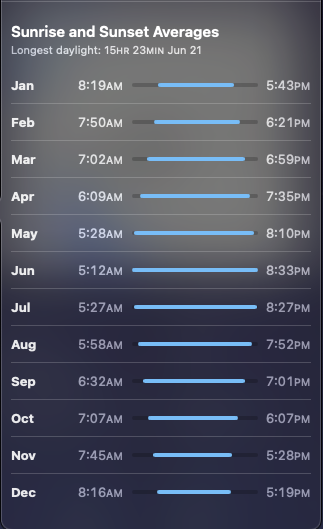
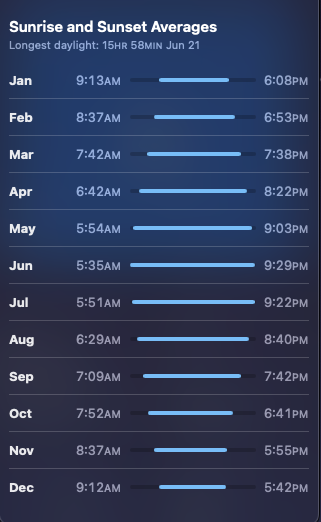
Оставлю на всякий случай полную таблицу дневного времени:
Алматы:
Усть-Каменогорск:
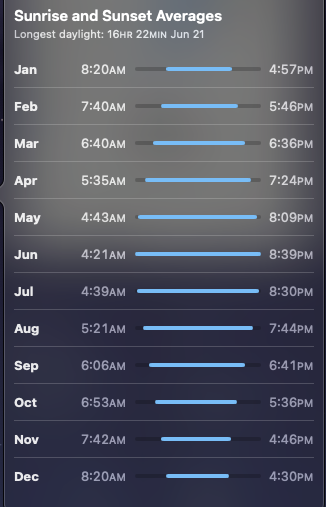
При переходе на UTC+5 все часы восходов/закатов откатятся на час назад. Я не знаю, кто в здравом уме считает нормальным восход в 3-4 часа ночи и закат в 7 вечера летом.
Атырау (останется неизменным):
Вот схожая таблица для Cambridge, MA:
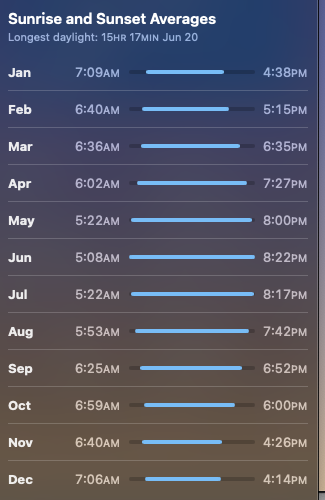
С апреля по ноябрь мы UTC-04, в остальное время UTC-05 (это объясняет скачок в ноябре).
По опыту, человека, живущего уже 5 лет с закатом до 5 вечера зимой скажу что это очень… своеобразно. 7-8 вечера ощущается как 22:00, тупо уже не хочется не делать ничего, кроме как пойти спать. Лишний час дневного света утром, при обычном расписании, сильной роли не играет, ибо это время тратится на готовку завтрака/качку/commuting, поэтому тебе вообще по барабану светло на улице или темно. А вот ближе к вечеру, когда ты вроде как еще должен работать, становится немного грустновато. Поэтому режим смещается в подьем в 4-5 утра и отбой в 7-9 вечера. Если ты студент, и (или) живешь один, и (или) имеешь гибкий рабочий график ты спокойно можешь подстроиться. А если у тебя работа до 6, ± час commuting, а потом тебе еще надо уделить время семье/детям?
Короче, соболезную жителям ВКО.
7 лайков


В казахстанской неделе восемь дней - шесть рабочих и два выходных)
9 лайков
И в сутках 25 часов)
9 лайков
Шли 2 сутки с перехода на UTC+5. Есть только один вопрос: зачем они так с нами? Кто этот “ученый”, который подтвердил что это полезно будет для жителей РК? Всего лишь 1 час, но уже столько проблем. И Каспи, и Егов, и КТЖ даже кринжанули дико с этого. Жалко очень дачников, придется им летом поливать огороды в кромешной темноте, и жителей сел, выпасывающие скот с восходом солнца.
P.S.
Обычно, с сумерок люди начинают выводить скот на выпас. В июне месяце это примерно 2-3 часа утра. Теперь это будет 01:00 - 02:00 
4 лайка
Мне вот очень почему то кажется, что они сделали так, потому что в Китае по всей стране тоже один часовой пояс, видимо какой то гений (не буду говорить конкретно кто, вы сами знаете) подумал : “О в Китае такая развитая экономика, давайте сделаем также как у них”. Но проблема в том что в Китае развитая экономика не потому что у них один часовой пояс по всей стране, да так легче контролировать 1,5 млрд человек, но все же нас 20 млн. Это лишь мое предположение такое.
4 лайка
Есть надежды, что в целом графики работ тех же школ и других организаций подстроят под «прежний» режим.(
3 лайка